Why Real Estate Investing Coaching Comes Up Right After the Course Ends
Ask ten people in Broward or Miami-Dade what stopped them from closing their first deal, and at least half of them will tell you a version of the same story. They finished a course. They understood the terminology. Then they found an actual property in Lauderhill or Hialeah, opened a spreadsheet, and had no idea whether the numbers in front of them were a deal or a trap. That gap between knowing the vocabulary and trusting your own judgment on a real property is exactly what real estate investing coaching in Florida is supposed to close.
Nobody talks about that part much. The course sells confidence. The property tests it. And the test usually arrives on a Tuesday afternoon when a listing has been up for six hours and you have to decide something.
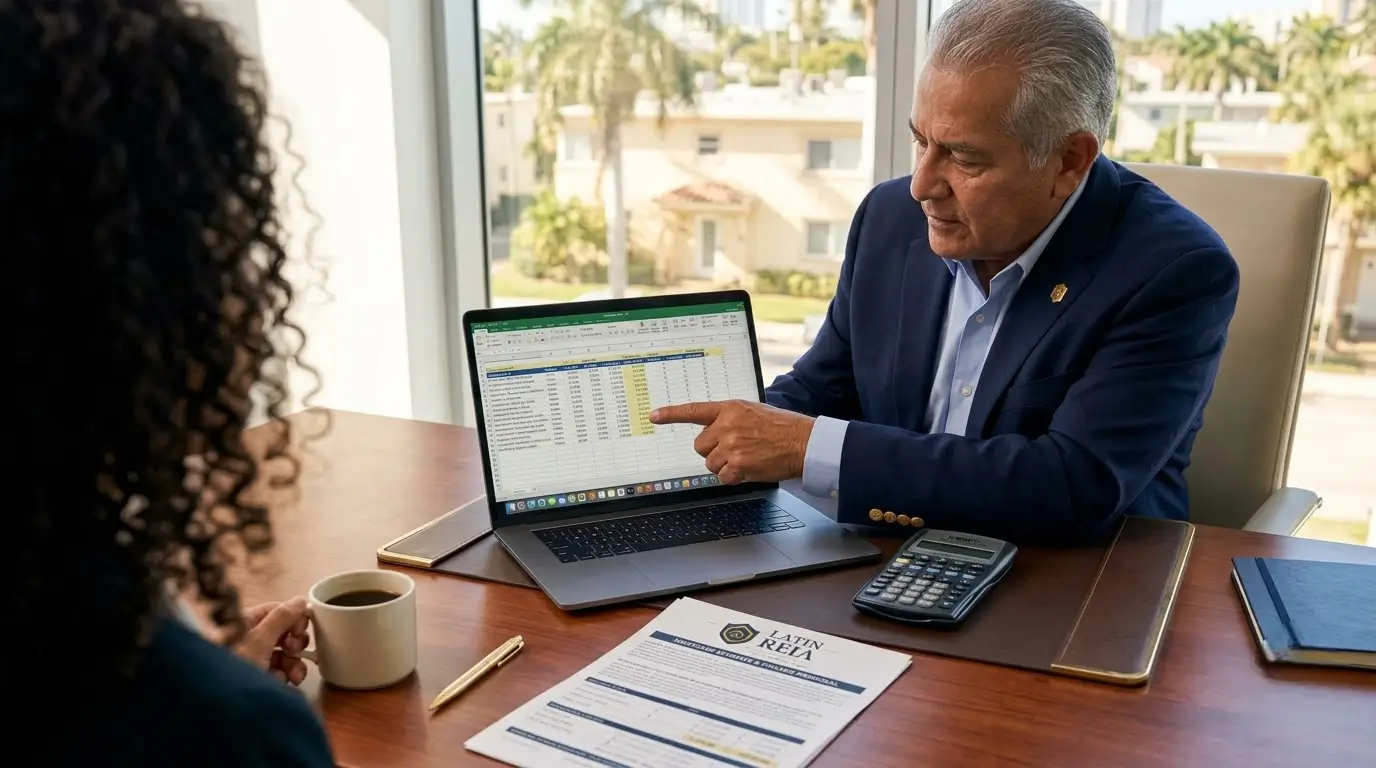
Deal review is where most first-time Florida investors get unstuck.
Why a Course Alone Rarely Gets You to Your First Deal
Courses are good at teaching the framework: cap rates, cash-on-cash return, the difference between a rental strategy and a flip. What they can’t do is sit next to you while you’re deciding whether a specific three-bedroom in Pompano Beach, priced at $340,000, actually pencils out once insurance and property taxes are factored in. That’s not a knock on courses. It’s just not what they were built to do. Coaching is.
This is the same wall we wrote about in what online real estate investing courses can’t teach you. The lessons hold up fine. The problem starts the moment a real address is involved.
What a Real Estate Mentorship Program Should Actually Include
A real estate mentorship program worth paying for reviews your actual numbers on an actual property, not a hypothetical from a slide deck. It should also mean direct access to someone who’s still buying property today, not a personality who built a curriculum years ago and moved on to selling courses full time. Latin REIA’s coaching program pairs 1-on-1 sessions with a 48-hour deal review and monthly group calls, which is a fair benchmark for what to expect elsewhere too. Ask what happens after the first call. If the answer is vague, that’s worth noticing before you sign anything.
A few things are worth confirming in writing rather than assuming:
- How quickly a deal gets reviewed once you send it over, and by whom.
- Whether your coach invests in your county, or somewhere with very different insurance math.
- What happens to your access once the initial term runs out.
- Whether you can reach a person between scheduled calls when a seller gives you 24 hours.
If you’re earlier than that and still sorting out strategy, real estate investing for beginners is a better starting point than paying for deal reviews you don’t have deals for yet.
Course, Class, or Coaching: What Each One Actually Does
These three get sold as if they’re interchangeable. They aren’t, and picking the wrong one is how people spend two years preparing instead of buying.
| What you’re comparing | Online course | Investment class | Coaching / mentorship |
|---|---|---|---|
| Main job | Teach the vocabulary and the formulas | Practice the formulas with an instructor in the room | Judge your specific deal, on your specific street |
| Feedback on your numbers | None, or an automated quiz | Group-level, on shared examples | Line by line, on the property you’re considering |
| Local Florida detail | Usually generic and national | Depends on who is teaching it | Zip-code level, if the coach still buys here |
| When it helps most | Before you’ve ever run a deal | While you’re building reps | When an offer is actually on the table |
| Where people get stuck | Finishing it and still not making an offer | Learning the method, not the market | Paying for it before they’re ready to act |
| Cost pattern | Lowest, one-time | Mid-range, per term | Highest, ongoing |
Most people do well with two of the three. A course for the framework, then coaching once a property is in play. If you want the middle option, real estate investment classes sit between the two.
Mentorship for Real Estate Flippers Looks Different Than Mentorship for Landlords
Mentorship for real estate flippers runs on different math than mentorship built for buy-and-hold investors. A flipper needs a coach who can sanity-check a rehab budget, a contractor timeline, and an exit price in a specific Florida zip code, because those numbers move fast in this market. A landlord needs a coach who understands DSCR loans, property management, and the insurance swings that come with owning rental property here. If a program treats both groups the same way, that’s worth asking about directly.
Wholesaling is a third case again, with its own contracts and its own timeline, which is why real estate wholesaling mentorship is handled separately rather than folded into a general track.
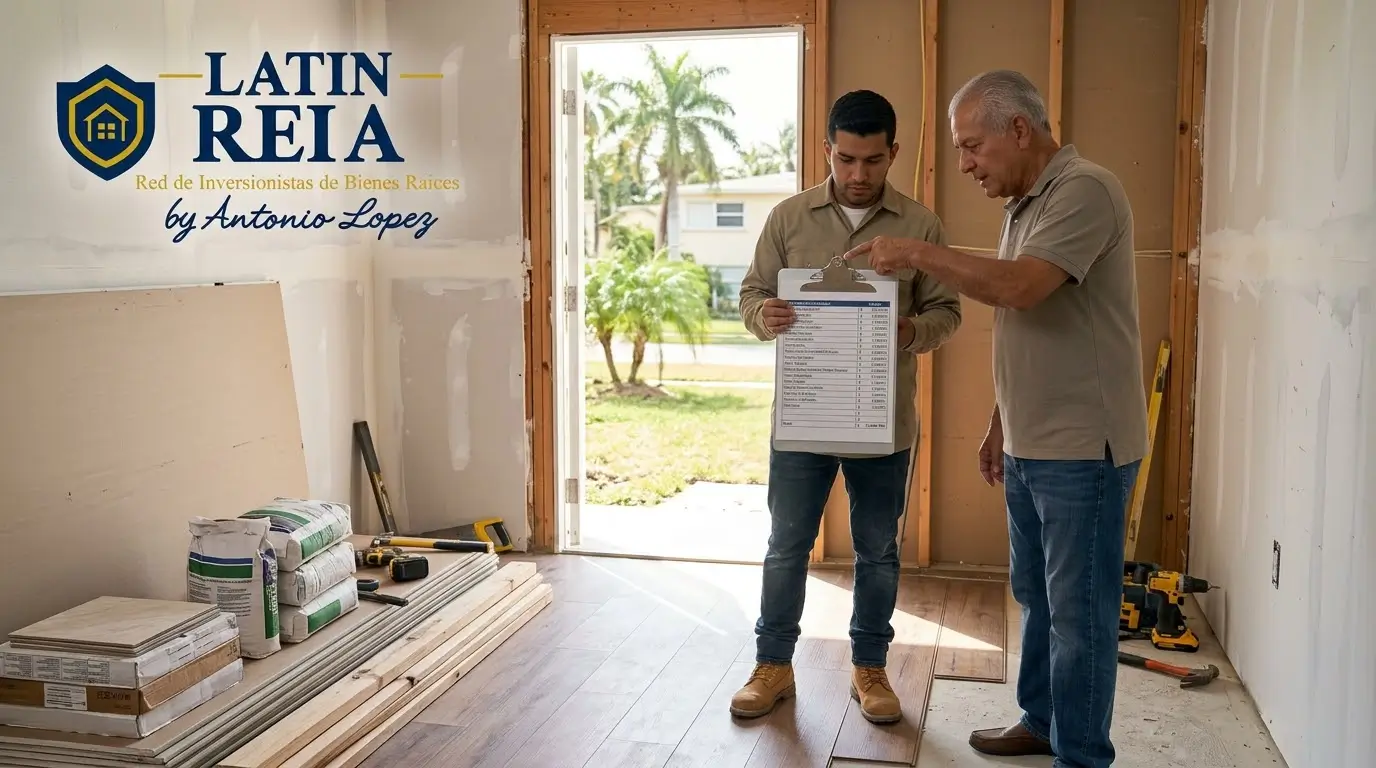
Rehab budgets and exit prices move fast in South Florida, which is why flippers need different coaching than landlords.
The Florida Details a Good Coach Won’t Skip
Flood zones, wind mitigation credits, hurricane deductibles, HOA restrictions on rentals: these aren’t footnotes in Florida, they’re the line items that decide whether a deal actually cash flows. The National Flood Insurance Program publishes flood zone maps that any Florida investor should check before making an offer, and a coach who’s actually closed deals here will already have that reflex. A coach who built their process somewhere else and moved to Florida later sometimes misses it.
A quick test before you hire anyone: ask what a wind mitigation inspection changed on their last purchase. Someone who buys here will have a number. Someone who doesn’t will have a definition.
How to Know If Coaching Is Actually Worth Paying For
Before enrolling in any real estate investing coaching program in Florida, ask three questions. Is the coach still actively buying property, or living off deals from a decade ago? Do you get a real person reviewing your numbers, or a course library and an automated inbox? And what happens six months in, once the excitement of getting started wears off and you’re stuck between offer two and offer three? A program that can answer all three clearly is worth a real look.
If you’re weighing a mentorship program against just buying another course, start with the coaching question, not the curriculum question. The curriculum teaches you the math. Coaching is what tells you whether this specific deal, in this specific Florida zip code, is the one worth making an offer on.
Still at the stage of deciding on a strategy? How to begin investing in real estate covers the order of operations before any of this becomes relevant.
Latin REIA runs its coaching this way, built around actual Florida deals rather than a national template, and it’s worth checking whether that structure fits where you are right now.
Frequently Asked Questions
What is real estate investing coaching?
It’s ongoing, 1-on-1 support from someone actively investing, focused on your actual deals rather than general lessons. Unlike a course, it continues after you’ve learned the basics, when you’re trying to decide whether a specific property is worth an offer.
How is a mentorship program different from a course?
A course teaches concepts once, on a fixed schedule. A mentorship program reviews your numbers as new deals come up, which is where most new investors actually get stuck. Many people use both: a course for the framework, coaching for the deals.
Is coaching worth it for flippers specifically?
It tends to matter more for flippers, since rehab budgets and exit prices change fast and a bad guess costs real money. A coach who reviews your scope of work and comps before you close can catch mistakes a course never would.
How much does real estate investing coaching cost in Florida?
Pricing varies widely by program, format, and how much 1-on-1 time is included, so it’s worth comparing what’s actually offered: deal reviews, call frequency, community access, rather than price alone.
Do I need to own property before hiring a coach?
No, but you should be close enough to act. Coaching pays off fastest when you’re looking at listings and running numbers weekly. If you’re still months away from that, a course or a class costs less and gets you to the same starting line.
Get real estate investing coaching built around Florida deals, not a national template
Bring a property you’re actually considering. You’ll get 1-on-1 sessions, a 48-hour deal review, and monthly group calls with people investing in the same counties you are. Spots are limited, and every coach in the program is still buying today.